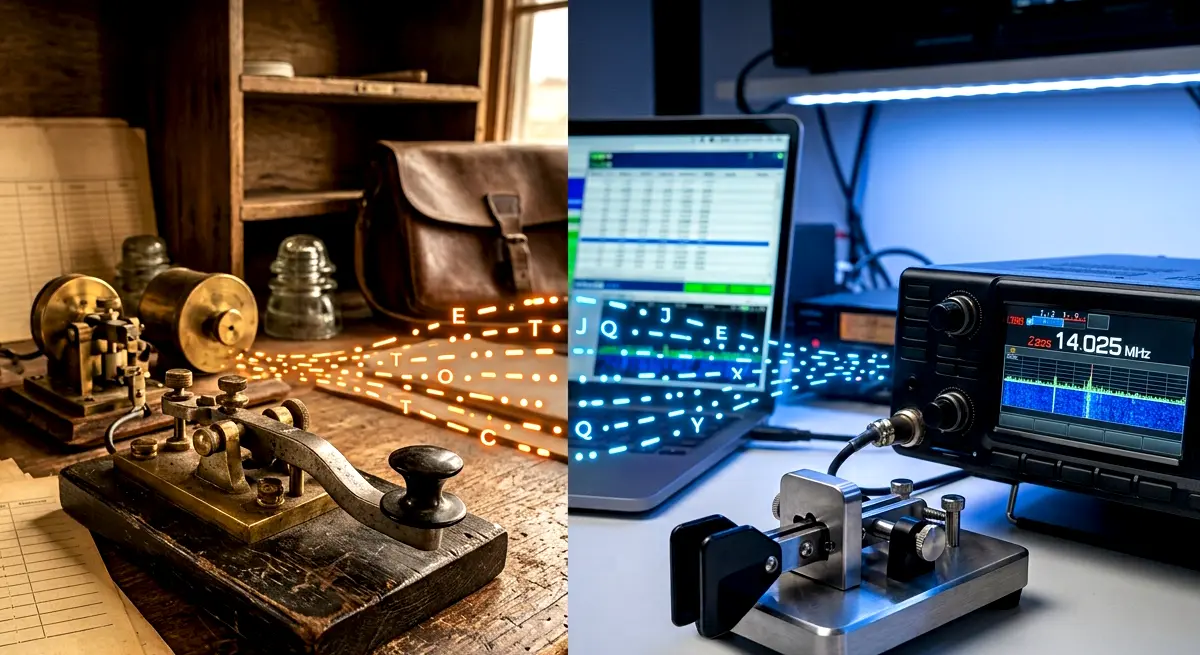
Morse Code for Thank You (and the Shortcut Real Operators Use)
Learn the full Morse code for “thank you,” how it sounds out loud, and the two-letter TU shortcut that ham radio operators use every day.
Read article →

Guides, history, and practical articles on learning, decoding, and using Morse code today.
9 articles

Learn the full Morse code for “thank you,” how it sounds out loud, and the two-letter TU shortcut that ham radio operators use every day.
Read article →

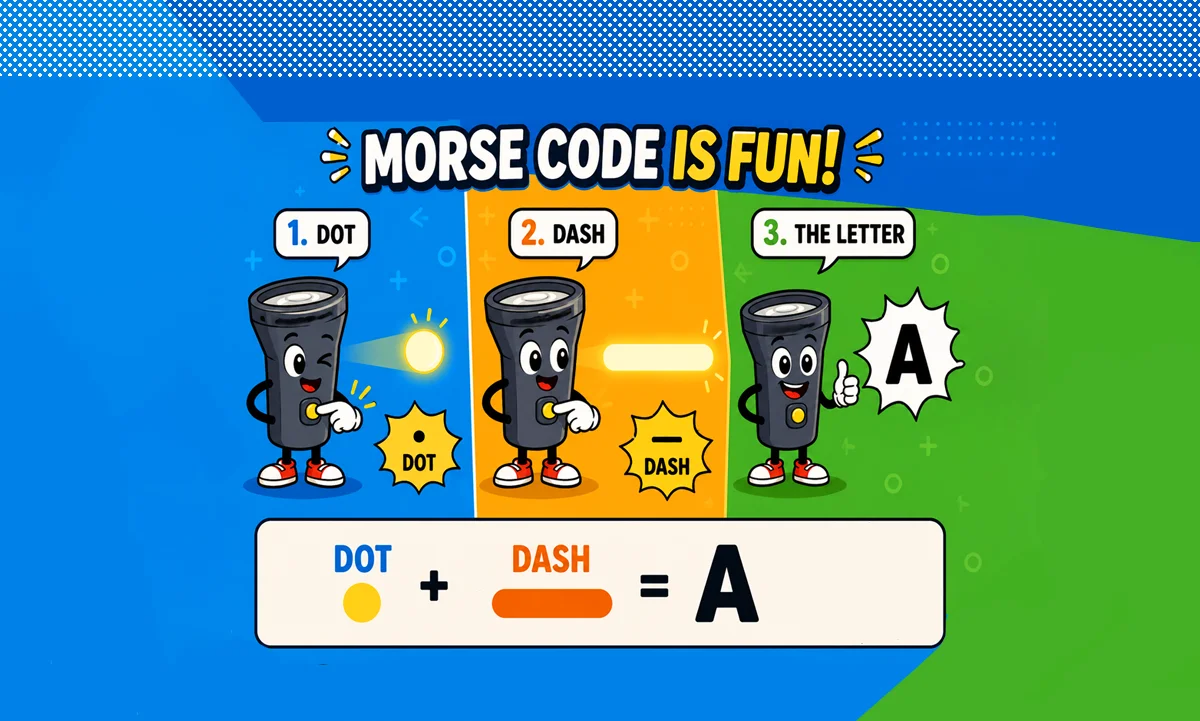
Say "I love you" in Morse code with dots and dashes — a romantic pattern you can tap, flash, or whisper. Learn the full code, letter by letter.
Read article →

The letter A in Morse code is one dot and one dash — dit-dah. Learn the pattern, why it was designed that way, and how to tell A apart from similar letters.
Read article →

SOS is three dots, three dashes, three dots — the world's most recognized distress signal. Learn the pattern, how to send it, and why it still matters.
Read article →

Learning Morse code is easier than it looks. With the right method — audio-first training and short daily sessions — most beginners are decoding messages within weeks.
Read article →

In 1836, Samuel Morse and Alfred Vail invented a system of dots and dashes that would connect continents and save lives for over 150 years.
Read article →

A definitive reference for the complete International Morse Code alphabet: every letter from A to Z, numbers 0–9, and the most-used punctuation characters.
Read article →

Think Morse code is obsolete? It's used in accessibility features, military survival training, aviation, and even smartphones. Here's where it still matters.
Read article →

There are actually two versions of Morse code — the familiar International standard and the older American version. They differ in 14 characters and have a fascinating history.
Read article →